The Projection Problem
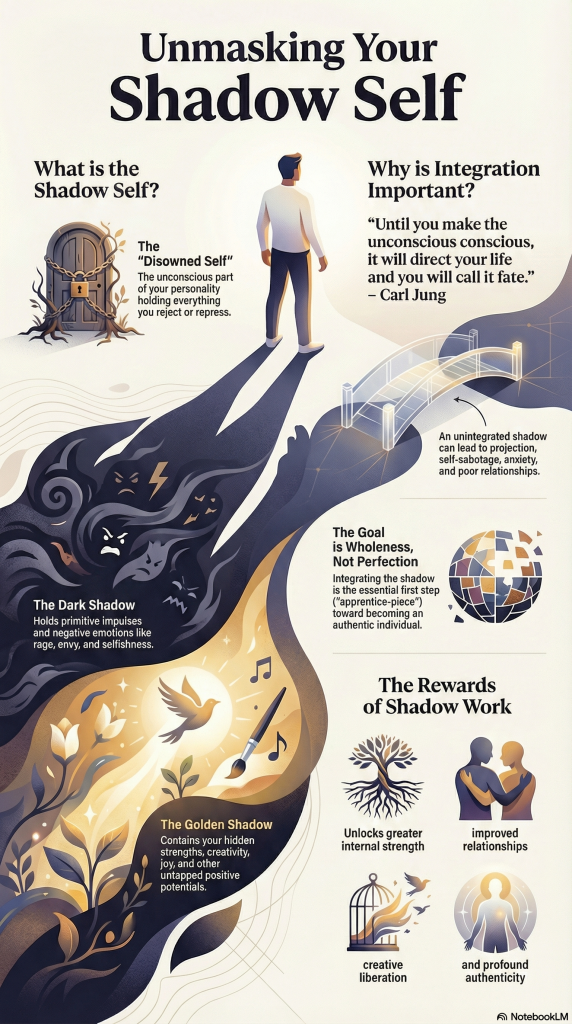
The most common way your hidden darkness surfaces is through projection. Since the Shadow represents a blind spot in the psyche, it’s extremely difficult to see in ourselves, so we unconsciously cast our disowned traits onto others.
- The Blame Game: If you get intensely irritated by a colleague you deem “arrogant,” consider that you might be denying your own suppressed feelings of arrogance or superiority
- The Critical Eye: Harsh judgment of others often reflects your own unacknowledged shadow
- The Victim Trap: Frequently playing the victim is often the Shadow’s way of avoiding responsibility or admitting wrongdoing
Jung stressed that everything that irritates us about others can lead us to an understanding of ourselves.
The Golden Shadow: Reclaiming Your Untapped Potential
The biggest surprise in Shadow work is realizing that you’ve been repressing some of your most valuable assets. This positive side of the unconscious is often called the Golden Shadow.
These are positive qualities, appropriate reactions, creative impulses, and inherent talents that were repressed because they were deemed “unacceptable” by society or your family, or because they felt too powerful to express.
Giving Away Your Gold
When you reject these positive traits, you project them onto others. This is known as “giving away your gold”.
- Have you ever deeply admired a speaker for their confidence or a friend for their effortless creativity, believing you could never possess those traits?
- The fact that you can perceive and appreciate these qualities in others is a direct reflection of your own inherent potential
- By idolizing these people, you distance yourself from your own capacity for brilliance
The cure for neurosis—the crushing tension that arises when your conscious desires conflict with your unconscious needs—often involves retrieving the lost qualities of the Golden Shadow. Integrating this gold unlocks tremendous creative energy and self-confidence, transforming repressed power into conscious strength.
Getting Started with Shadow Work (The Apprentice-Piece)
Shadow work is the essential “apprentice-piece” of psychological development, leading toward the ultimate goal of wholeness. It requires courage, persistence and moral effort to recognize the dark aspects of your personality as real.
Here are practical methods for bringing your unconscious material to light:
1. Tune In to Your Triggers (Self-Reflection)
The first step is cultivating a self-reflective mindset
- Observe Your Reactions: Pay close attention to people or situations that evoke a strong negative emotional charge (irritation, envy, rage)
- Ask the Deeper Questions: When triggered, pause and ask yourself, “What is behind this reaction?” or “Can I observe these same qualities within myself?”
- Check Your Judgments: Use your judgments and envy as diagnostic tools: judgment often reveals a disowned dark trait, while envy points to a repressed golden potential
2. Dialogue with the Unconscious (Journaling and Imagination)
Engage directly with the hidden parts of yourself through symbolic methods:
- Shadow Journaling: Keep a private space for uncensored writing. Use prompts like, “What part of myself do I condemn in others?” or “What truth about myself do I avoid out of fear of rejection?”. You can even write dialogues, allowing your Shadow to speak directly, perhaps saying, “I am the part of you that’s tired of pretending”
- Dream Analysis: Dreams are symbolic messengers from your Self. Keep a dream journal and look for figures of the same gender as yourself, as they often represent the Shadow
- Creative Expression: If words fail, use art. Try drawing what an emotion, like fear or shame, looks like, and then draw how it changes once you witness it.
3. Embrace Acceptance
Shadow integration ultimately boils down to one primary thing: acceptance. You must accept the reality of these insights, even the dark ones. Acceptance allows the seemingly endless psychic infighting to harmonize. By integrating your Shadow, you reduce internal conflict, increase authenticity and free up psychic energy previously wasted on repression.
This practice shifts you from reacting blindly to unconscious patterns to making mindful, deliberate choices.