
Macronutrients (fats, proteins and carbohydrates)

Understanding Macronutrients: What Are They and Why Are They So Important?

Listen to the Podcast Here:

Introduction

Macronutrients are the foundational components of the human diet, serving as the primary source of energy and the structural building blocks necessary for the body to function. Unlike micronutrients (vitamins and minerals) that are needed only in small amounts, macronutrients—protein, carbohydrates and fats (lipids)—are required daily in large quantities, dictating their critical role in sustaining life and overall metabolic health.
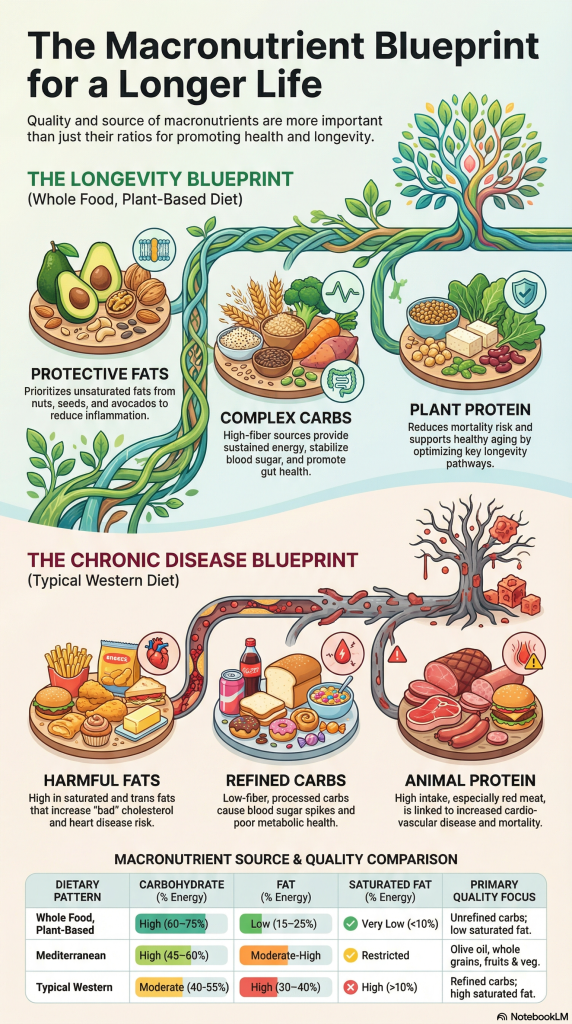
Understanding these three pillars and prioritizing their quality and source is the key to unlocking true health and longevity.
Macronutrient blueprint for longevity and health, by The Centre of Mastery

What Are Macronutrients and Why Are They Important?

Protein: The Body’s Architects and Regulators
Protein is fundamentally important for the architecture and functional regulation of the human body. Proteins in food are broken down during digestion into molecular units called amino acids, often referred to as the “building blocks of the body”.
The primary function of protein is structural and regulatory, meaning it is prioritized for building and repair over being used merely for fuel. Amino acids are used to:
  • Build and repair body tissue
  • Build muscle, skin and organs
  • Make hormones and brain chemicals
  • Start chemical reactions, help cells communicate or transport things within the body
The body needs 20 different amino acids to function correctly, and nine of these, the essential amino acids (EAAs), must be consumed through food. If energy from fats or carbohydrates is scarce, proteins can be diverted and used for energy.

Carbohydrates: The Preferred Fuel Source

Carbohydrates are biochemically critical as the body’s preferred and most readily available source of energy. Carbohydrates are broken down primarily into glucose, which serves as the main fuel source for nearly every cell in the body.

Carbohydrates are classified based on how quickly they are absorbed:

  • Simple Carbohydrates (Sugars): These are digested and absorbed quickly
  • Complex Carbohydrates (Starches): These take longer to break down, providing a more sustained energy release
A specific complex carbohydrate, known as dietary fibre, is found exclusively in plant foods and is fundamentally important. Although fibre does not directly contribute to energy needs, it promotes gut health, helps control total caloric intake by promoting satiety, and can lower the amount of fat and cholesterol in the blood.

Fats (Lipids): Energy Storage and Structural Necessity

Fats perform a diverse range of functions beyond energy storage. Fats from food are broken down into fatty acids. A gram of fat provides 9 kcal (37 kJ) of energy, making it the most energy-dense macronutrient.
Fats are essential for structural and regulatory purposes:
  • Building cell membranes
  • Helping the body absorb fat-soluble vitamins (A, D, E, and K)
  • Making hormones
The specific type of fat consumed is crucial for health outcomes. Unsaturated fats (Monounsaturated and Polyunsaturated) are generally beneficial for heart health. Conversely, saturated and trans fats are considered unhealthy fats because they can raise LDL (“bad”) cholesterol, which increases the risk of heart disease and stroke.

Why the Whole Food, Plant-Based Diet is Optimal for Life and Longevity

While the Acceptable Macronutrient Distribution Range (AMDR) for adults suggests 45%–65% of total energy from carbohydrates, 20%–35% from total fats, and 10%–25% from protein, the Whole Food, Plant-Based (WFPB) diet leverages superior macronutrient quality and source to promote longevity and disease prevention across all stages of life.
Superior Macronutrient Quality
The WFPB diet distinguishes itself from omnivorous and Western diets by making fundamentally healthier choices within each macronutrient category.
 
  • Carbohydrates and Fibre: The WFPB diet’s primary energy source is complex carbohydrates, typically ranging from 60% to 75% of total energy, derived from whole grains, legumes, fruits, and vegetables. This composition ensures a high intake of dietary fibre, which is typically inadequate in Western diets. This high fibre content results in a low glycaemic load, which is crucial for sustained metabolic health and preventing chronic hyperinsulinemia.
  • Fats and Cardiovascular Protection: The WFPB diet minimizes or excludes harmful components such as saturated fat, trans-fats, and cholesterol. The WFPB profile is generally low to moderate in total fat (typically 15% to 25% of energy), focusing on healthy fats from whole sources like nuts, seeds, and avocados. For instance, clinical trials aimed at disease reversal often implement very low-fat vegan diets, with total fat intake around 10% of energy. This minimisation of saturated fat is crucial because saturated fat contributes to insulin resistance through “lipotoxicity”. This mechanism involves the build-up of toxic fat metabolites, such as diacylglycerol and ceramide, inside liver and muscle cells. This accumulation directly impairs insulin signalling, decreasing glucose absorption and causing insulin resistance. Notably, the vegan group was the only dietary group in a study of Norwegian youth that did not exceed the recommendation of <10% E for saturated fatty acids.
  • Protein and Longevity Pathways: The WFPB diet features a moderate protein profile (typically 10–15% of energy). This intake is sourced from diverse plants like legumes and whole grains, and substituting animal protein with plant protein is associated with a reduced risk of mortality. The moderate protein load, combined with the plant protein’s unique amino acid composition (lower in methionine and branched-chain amino acids), may confer longevity benefits by downregulating nutrient-sensing pathways (mTOR/IGF-1). These pathways are activated by higher levels of amino acids found predominantly in animal products
Optimal Health Across All Life Stages
A balanced whole foods, plant-based (WFPB) diet is best positioned for longevity because it addresses the fundamental drivers of age-related chronic disease through its superior macronutrient quality:
  • Disease Prevention and Mortality: Greater adherence to healthy plant-based diets is strongly associated with a significantly decreased risk of all-cause mortality (Relative Risk ranging from 0.84 to 0.86). The diet is highly cardioprotective, reducing cardiovascular disease (CVD) mortality by 19%. The high quality of complex carbohydrates and low saturated fat effectively reduces the risk of Type 2 Diabetes by nearly 50% for high adherence
  • Cellular Aging: The WFPB macronutrient profile influences longevity at the cellular level by optimising nutrient-sensing pathways and promoting the maintenance of genomic integrity, with evidence suggesting it can lengthen telomeres
  • Life-Stage Appropriateness: When intentionally planned, a WFPB diet provides sufficient nutrients and is deemed appropriate for all stages of life, including pregnancy, infancy, childhood, adolescence, and older adulthood. It avoids the excess saturated fat, added sugar, and high animal protein often consumed in Western diets
  • Older Adults: The WFPB approach is highly beneficial for the elderly as it is nutrient-dense and addresses age-related concerns like sarcopenia (by providing adequate protein). It is seen as potentially the most important prescriptive tool to help older patients achieve a longer life and better quality of life
The key to achieving the benefits of this longevity tool lies in adhering strictly to the quality control of the “whole food” principle, ensuring high fibre, complex carbohydrates, and low saturated fat, alongside mindful supplementation of key micronutrients like Vitamin B12 and Vitamin D.
We hope this explanation has shone some light on the meaning of ‘macronutrients’ and how different diets impact the necessary macronutrient ratios. If you would like to learn more about terms like this, or delve into further categories such as nutrition, fitness, mindset or philosophy, check out our glossary and resources.
 
Alternatively, you can watch our short video on Macronutrients here: